Blog

  • Exercise for your American Bully puppy

    Raising a Strong Bully Puppy: Why Growth Plates Matter

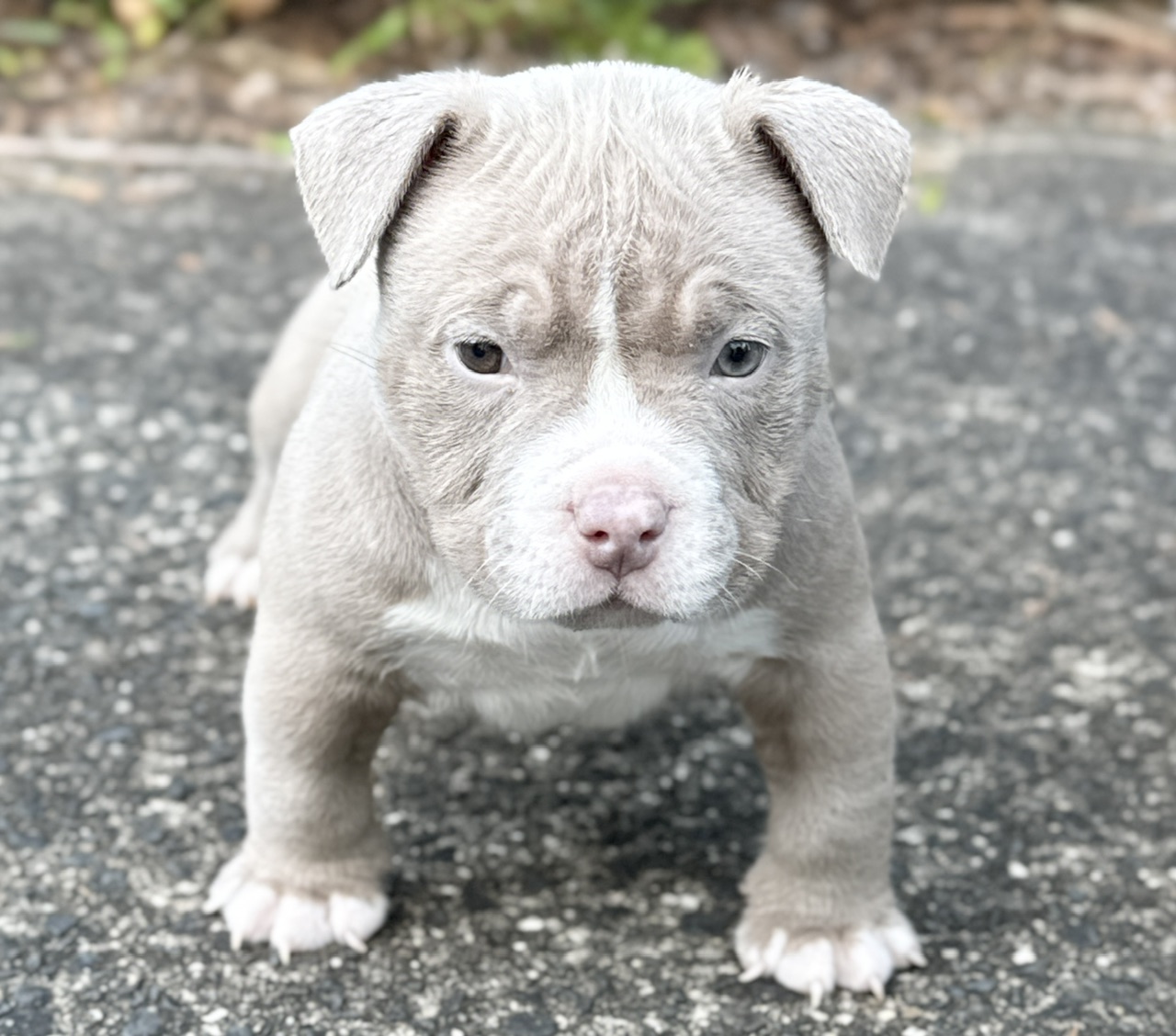
    There is nothing more exciting than bringing your new Bully puppy home. Whether you’ve chosen an American Bully in Standard Bully class, Pocket Bully, Micro Bully, Exotic Bully, those first weeks are full of energy, personality, and nonstop movement — followed by long, deep puppy naps.

    Because they seem so active, many owners assume puppies can’t get “too much” exercise. Some even believe it’s fine to let them run and play until they completely tire themselves out.

    But during early development, that approach can quietly cause long-term damage.


    At 8–10 Weeks: They’re Still Under Construction

    When you bring home an 8–10 week old Bully puppy, remember this:

    Their bones are not fully formed.
    Their joints are not fully structured.
    Their growth plates have not closed.

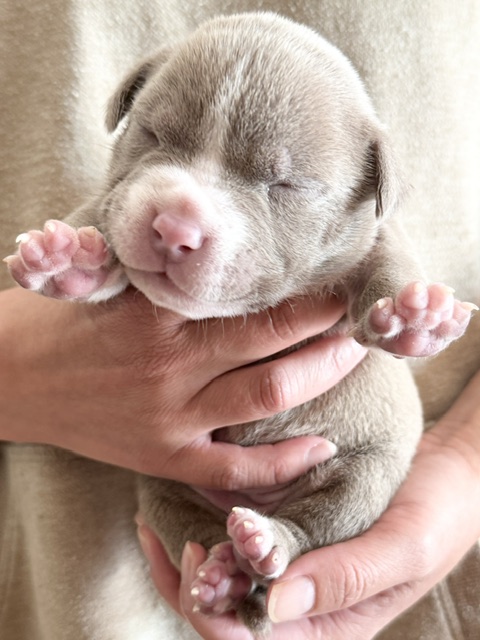
    Those oversized paws and wobbly movements aren’t just cute — they’re signs of an immature skeletal system. At this stage, joints are supported primarily by muscle, tendons, and ligaments, with soft cartilage areas at the ends of long bones. The bones are not yet tightly fitted into strong, stable sockets.

    Your puppy is literally building its frame.


    What Are Growth Plates?

    Growth plates (also called epiphyseal plates) are soft areas of cartilage located at the ends of long bones. As your puppy matures, these plates slowly harden (calcify) and turn into solid bone.

    For healthy development, bones must grow evenly and at the same rate. This synchronized growth is critical for producing correct structure, balance, and movement — especially in powerful, muscular Bully breeds.

    Until the growth plates fully close, they remain vulnerable to injury. They are actually the last part of the bone to harden.

    If a growth plate is damaged:

    • Growth on that side may slow or stop.
    • The opposite side may continue growing normally.
    • This uneven development can cause deformities and lifelong structural problems.

    One of the most common areas for growth plate issues is between the radius and ulna in the front leg. If one bone stops growing and the other continues, it can result in bowed legs and an abnormal gait that affects the dog permanently. Over time, this imbalance can place stress on other joints and lead to secondary issues such as arthritis or ligament strain.


    How Over-Exercise Causes Damage

    Normal play is healthy. Controlled movement builds muscle and coordination.

    The problem is excessive impact.

    Repeated high-impact activity — especially during rapid growth phases — can damage developing joints. This includes:

    • Jumping on and off sofas or beds
    • Long walks beyond their developmental capacity
    • Repetitive running on hard surfaces
    • Forced jogging
    • Intense rough play
    • Slippery floors with no traction

    Every big jump creates force between soft, forming bones. In moderation, that’s normal wear and tear. But repeated stress during early growth can interfere with proper skeletal development.

    You only get one chance to grow them correctly.


    When Are Puppies Most at Risk?

    The fastest growth phase typically occurs between 4 and 8 months of age. During this time, growth plates are working hard and are particularly vulnerable.

    In many medium-to-large breeds, growth plates begin closing around 8–12 months. However, some larger or more heavily built dogs may take 12–18 months (or longer) to fully mature.

    Bully breeds vary depending on size and bloodline, so always monitor your individual dog’s development.


    How Much Exercise Is Appropriate?

    A commonly referenced guideline (often cited by organizations such as The Kennel Club) suggests:

    Five minutes of structured exercise per month of age, twice daily.

    For example:

    • 3 months = 15 minutes, twice daily
    • 6 months = 30 minutes, twice daily

    Important: This refers to gentle, controlled exercise — not high-intensity jumping or sprinting.

    A calm 30-minute walk is very different from 30 minutes of explosive running and bouncing.

    Always:

    • Stop before your puppy becomes exhausted
    • Avoid forced exercise
    • Allow free rest periods
    • Prioritize safe footing and soft surfaces

    Breeding + Upbringing = Structure

    A well-built Bully is the result of two things:

    Excellent breeding AND responsible upbringing.

    Even the best genetics can be compromised by poor management during the growth phase.

    Once your dog is fully mature, you’ll have years to enjoy:

    • Strength training
    • Conditioning
    • Longer walks
    • Performance work
    • Higher-impact play

    But while they are still babies, your focus should be protection and controlled development.


    Give the Gift That Can Only Be Given Once

    Slow growth is healthy growth.
    Controlled exercise builds longevity.
    Patience protects structure.

    You only get one opportunity to develop your Bully puppy’s foundation. Protect their growth plates now — and you’ll be rewarded with strength, balance, and soundness for life.

    If you ever have concerns about your puppy’s development or exercise levels, speak with your breeder and veterinarian for breed-specific guidance.

    X-Ray of a puppy

    X-Ray of a puppy
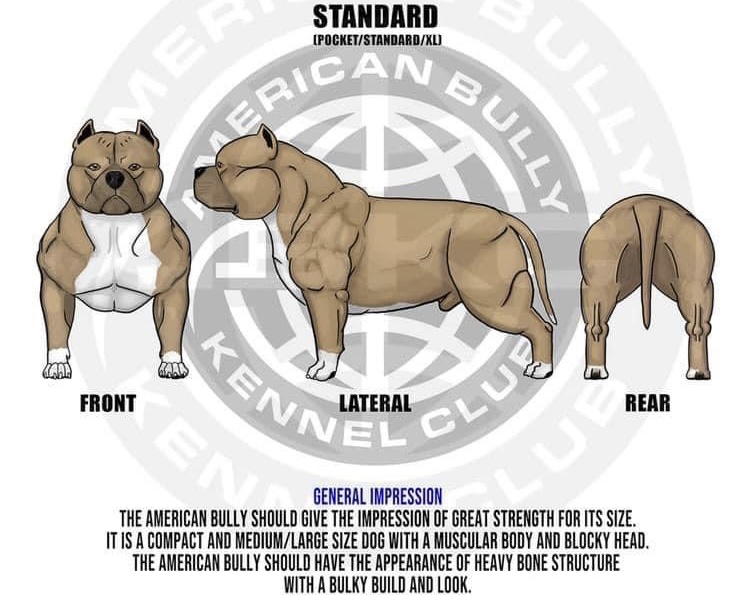
  • Illustration of the American Bully

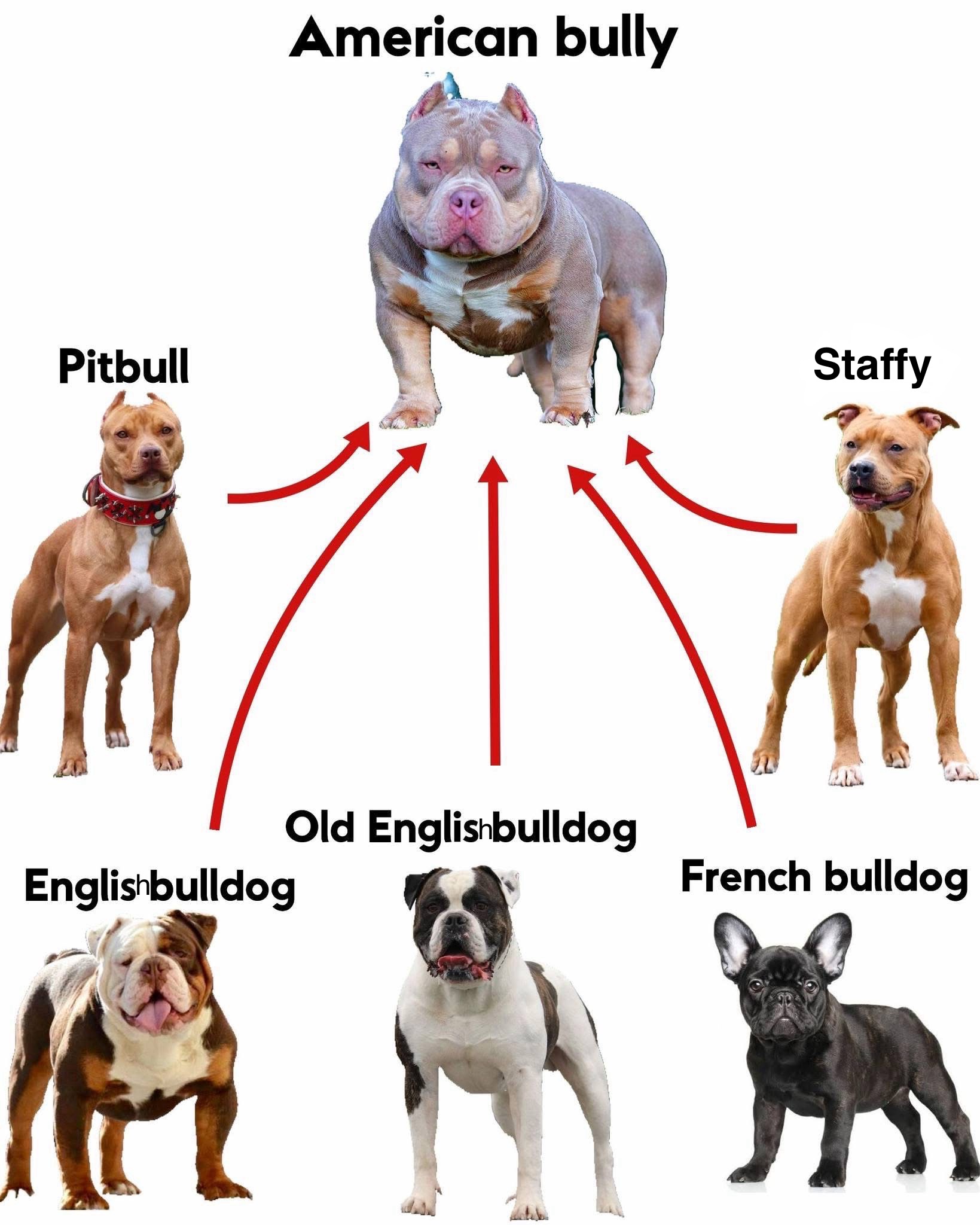
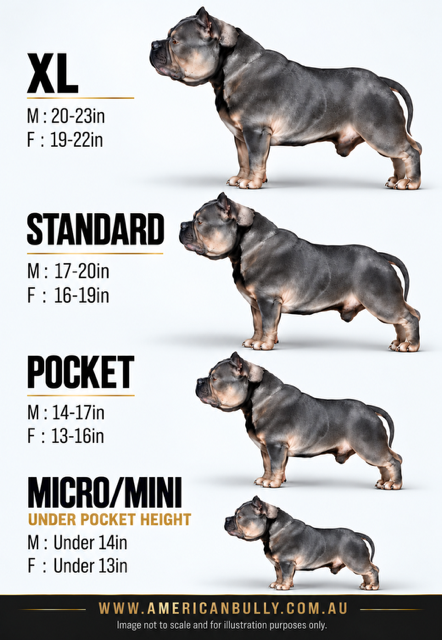
    Regardless of their classification determined by their adult heights in class Pocket Bully, Standard Bully, XL Bully, Micro/Miniature Bully. 

    The American Bully should give the impression of great strength for its size. It is a compact and medium/large size dog with a muscular body and blocky head. The American Bully should have the appearance of heavy bone structure with a bulky build and look. Bred as a companion dog, intelligent, exhibiting confidence, a zest for life, along with an exuberant willingness to please and bond with their family. 

    Source: THE ABKC, Bullymon

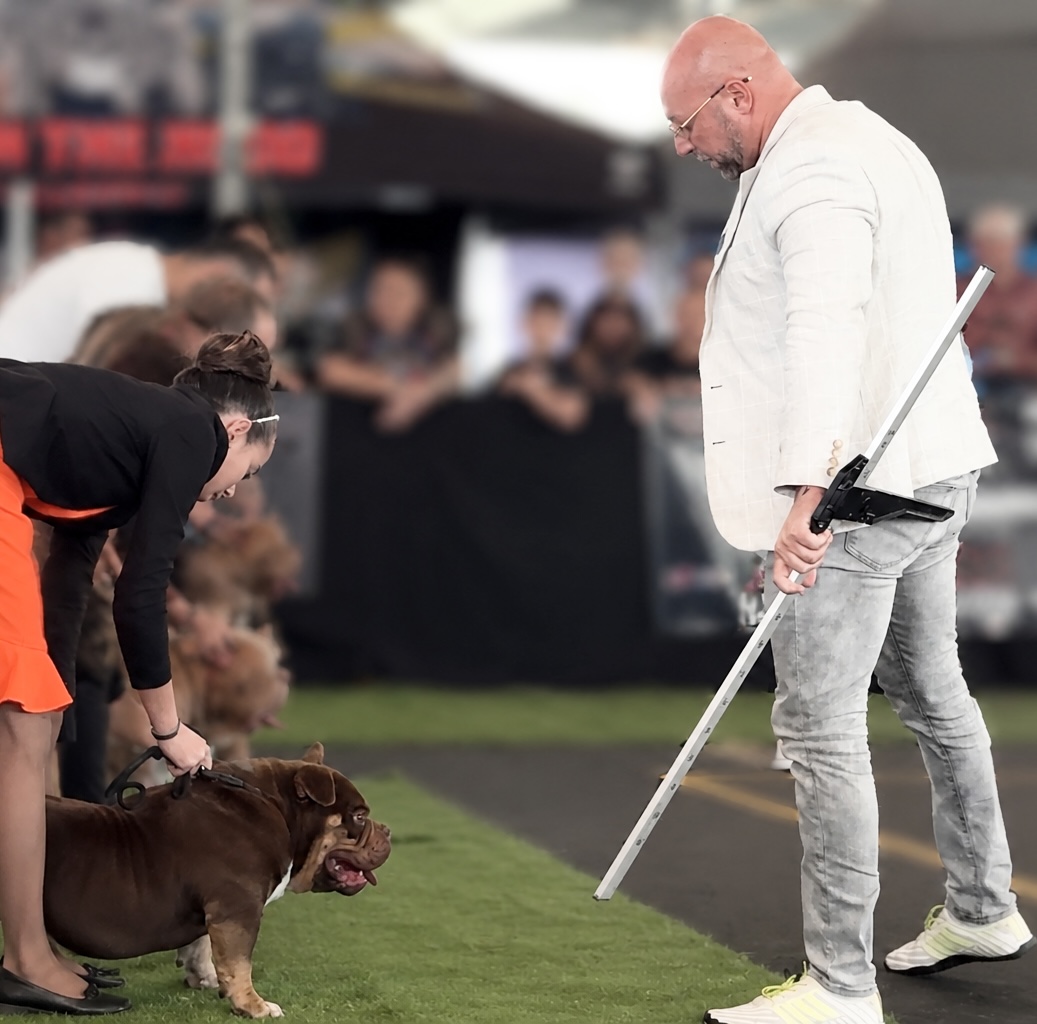
  • Explanation of a Stack Off the American Bully

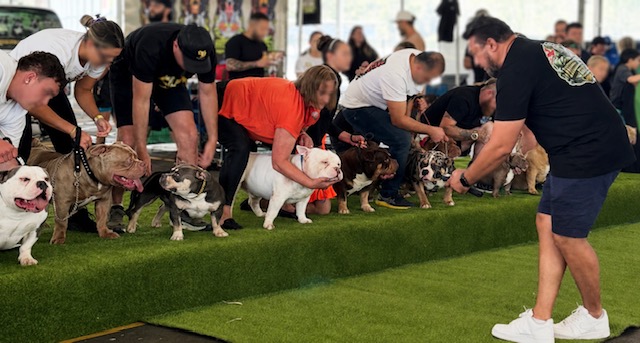
    Explanation of a Stack Off Show for the American Bully watch the video explained by Bashar Baoud experience in the breed for over 25 years.

    ABKC Australia Stack Off Winner Bullymon Mini Beast judged by USA Bashar Baoud

    Snippet of 2024 American Bully Kennel Club Australia Sydney

    Chocolate Tri Bullymon Mini Beast with his handler Isabella Tuner

    Source  credit to: Bullymon, TheABKC, MuscletoneBullys

    Watch the full video clip of the ABKC Stack Off: Click here

  • The future of the American Bully breed

    The future of the American Bully breed

    Following ABKC President Dave Wilson’s announcement of the Nationals Alternative Variety Showcase, the alternative variety includes Miniature Bully (Micro Bully), Blotch Bully (Merle Bully) and Extreme Bully. The American Bully community has expressed mixed reactions. 

    As the event approaches, questions arise about the EXTREME Variety versions of the breed. The American Bully is inherently an extreme breed, but how extreme are we really discussing in this Extreme Bully Variety exhibit show? What traits and features are they looking for? The community has successfully showcased some notably extreme dogs, but are we referring to dogs that are out of type such as more exaggerated features or those that simply don’t conform to the standards? This concern exists across all varieties.

    There is also concern that the term “extreme” often excuses dogs that aren’t well-structured. It has been proven that a well-balanced dog can achieve the desired muscle, size, and mass. Labeling a dog as extreme can suggest an overdone appearance that misaligns with the breed’s standard.

    Many are questioning what defines “extreme,” especially as we see dogs that surpass current standards.

    The American Bully is expected to embody Extreme Bully characteristics and features. The ABKC has previously noted that the original Extreme Bully class was removed from their registry because these traits should already be integral to the American Bully breed standard.

    On the other hand, some of the community appreciate the opportunity for varieties like Merle, Miniature, and Extreme Bullies to be showcased, emphasizing that these dogs deserve recognition and offering excitement for quality dogs to gain a platform.

    Conversely, critics argue that Merle Bullies, an essential part of the breed’s history, are being sidelined. Some fear that introducing these varieties might dilute the breed standard, leading to lower-quality breeding practices.

    Public opinion remains divided. Some suggest that those dissatisfied with the changes should create their own registry, seeing this shift as an opportunity for growth. Others express frustration that the Nationals should prioritize top-tier dogs that adhere to traditional standards rather than experimenting with new varieties.

    While the new showcase aims to promote diversity and inclusivity, it’s evident that opinions vary regarding its potential impact on the breed’s future.

    Is this the next phase of development for the breed? 

    This showcase provides our community, especially the minority, with a chance to present these types to a wider audience. It also highlights what these “types” look like today and where they stand in their development. Such as the Miniature Bully (Micro Bully) these dogs share the same functionality as the current pocket variety. The same goes for Merle’s, do they adhere to the standard as far as conformation. It’s a fun event and an opportunity to showcase the best of these breeds in relation to the ABKC.

    In young breeds, like the American Bully and all of these (American Bully varieties), change is inevitable as they develop. Early on, many breeds began to emerge, some evolving while others did not. Trends shift, leading to population growth, and what was once in style can quickly fall out of favor. New registries are constantly emerging to adapt to these changes.

    The American Bully is still a young breed and far from finished developing. It is evolving, not just changing. We now have a wealth of quality breeding stock, which means we no longer need to rely on terrier-type dogs. It’s important to focus on breeding for true American Bully type.

    “Without type, the identity of the breed is lost.”

    Source: Facebook, Bullyview, ABKC

    More info on Australian bred Sonic, Astro and Mini Beast and their family tree: Click here

  • Pocket Bullies: Are They Good Family Pets?

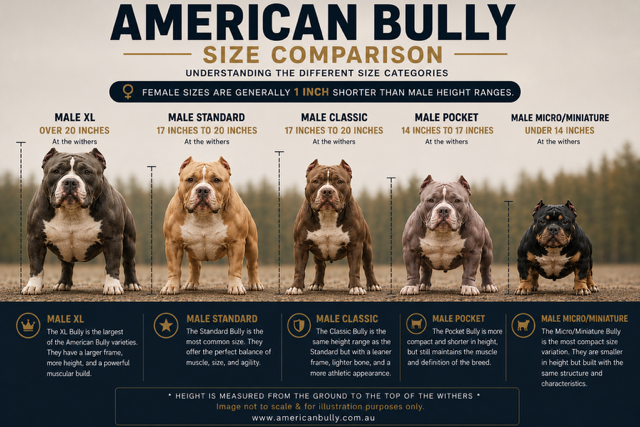
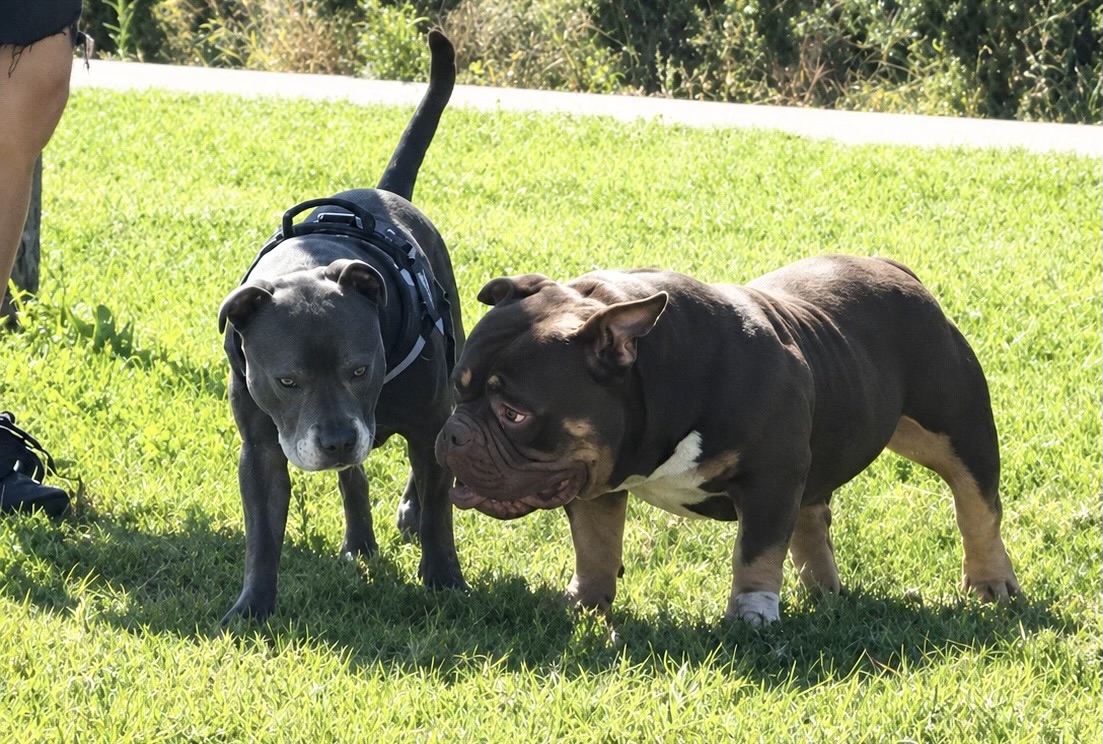
    Pocket Bullies are a small version of the American Bully breed. They usually stand about 14 to 17 inches tall at the shoulders (comparative in size height between the Staffordshire bull terrier with a more muscular thick build and English Bulldog and weigh between 15kg to 40kg. Pocket Bully with their muscular build and intimidating appearance yet friendly face, many people wonder if they would make good family pets.

    What Are They Like?

    Pocket Bullies are known for being friendly and loving. They love spending time with people and often get along well with kids. Even though they look tough, they can be very gentle and playful, making them great companions for families.

    Training and Socializing

    Just like all dogs, Pocket Bullies need to learn how to behave. It’s important to train them when they are young. Taking them to new places, meeting different people, and playing with other animals can help them grow up to be happy and well-mannered. Using treats and praise helps them learn best!

    How Much Exercise Do They Need?

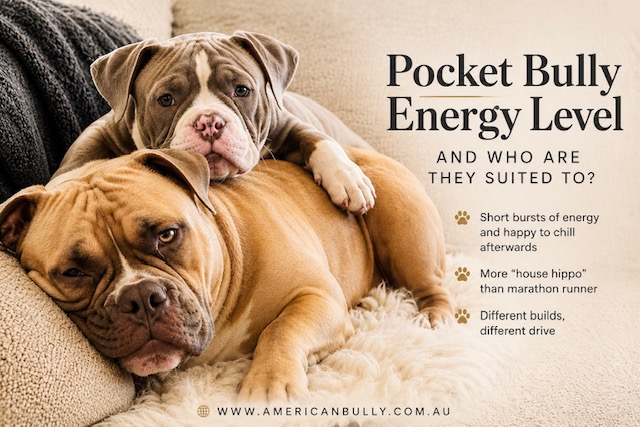
    Pocket Bullies are medium to low energetic dog, a bit less than a Staffordshire bull terrier, yet a bit more energy than an English Bulldog and love to play. They need regular exercise, like daily walks and fun games, to stay healthy and happy. They make great playmates for families who enjoy outdoor and indoor activities, but they don’t need as much space or exercise as some larger breeds, so they can do well in homes or apartments and prefer to be a lounge or home lap dog.

    Health Tips

    Most Pocket Bullies are healthy, but like all dogs, they can have some health issues. Regular check-ups with a vet, a good diet, and enough exercise are important for keeping them healthy. If you’re thinking about getting one, it’s a good idea to find a responsible breeder who takes care of their dogs’ health.

    Good with Kids and Other Pets

    Pocket Bullies are usually great with kids. They love to play and can be very gentle. However, it’s important to always supervise them when they are with young children to keep everyone safe. They can also get along with other pets if introduced carefully.

    Conclusion

    In short, Pocket Bullies can be wonderful family pets! They are loving, playful, and adaptable, making them great companions. If your family is ready to spend time training and exercising a dog, a Pocket Bully could be a fantastic addition to your home. Just remember, every dog needs love and care to thrive!

    Image below of Male American Pocket Bully in Australia

    Image below of a male Staffordshire Bull Terrier

    Image below of different type of Bulldog, the English Bulldog is the most comparative to the Pocket Bully in size height

    Fallen in love with a Pocket Bully: Click here to find your next best fur friend

  • American Bully breed varieties to be showcased in ABKC National 

    The American Bully Kennel Club) ABKC National held once a year in the USA where ABKC American Bully Champions and Grand-champions in the class of XL Bully, Standard Bully, Classic Bully and Pocket Bully, compete for the overall American Bully National GrandChampionship title. 

    This year ABKC National will have a separate show-ring for alternative variety of American Bully, highlighting American Bully breed varieties currently not represented in conformation.  

    2024 ABKC National in USA – announced by ABKC founder David Wilson 

    “At this year’s ABKC Nationals event, we are introducing the Nationals Alternative Variety Showcase, a dedicated ring and show highlighting American Bully breed varieties currently not represented in conformation. 

    (This is a separate ring from

    The main event and not pointed, it’s to display ABKC registered dogs that have been campaigning for competition and to give breeders a chance to show their quality specimens and the public an opportunity to see them) 

    This event will feature three sex-separated categories. 

    Firstly, Blotched American Bullies (also known as Merle), presently allowed for registration but not competition, will have their final annual showcase opportunity for breeders to exhibit exemplary conformation specimens. 

    Secondly, the Mini American Bully category will comprise American Bullies below the Pocket variety’s minimum height requirements; please submit only top-notch conformation representatives. 

    Lastly, extreme versions of the American Bully breed will be showcased; only genuine extreme representations are eligible. 

    Eligibility is restricted to ABKC-registered dogs over one year old.”

    Buy ABKC Registered American Bully dog and puppy: Click here

  • Mini American Bully Astro Boy

    Mini American Bully also known as Micro Bully or Micro American Bully are American Bullies below the Pocket variety’s minimum height requirements at adult age (1year and over).

    Image of Bullymon Astro Boy

    Screenshot

    American Bully Stud: Click Here

  • What registry accepts the American Bully Breed?

    Here are a list of Pedigree Registry and Associations that accept the American Bully breed.

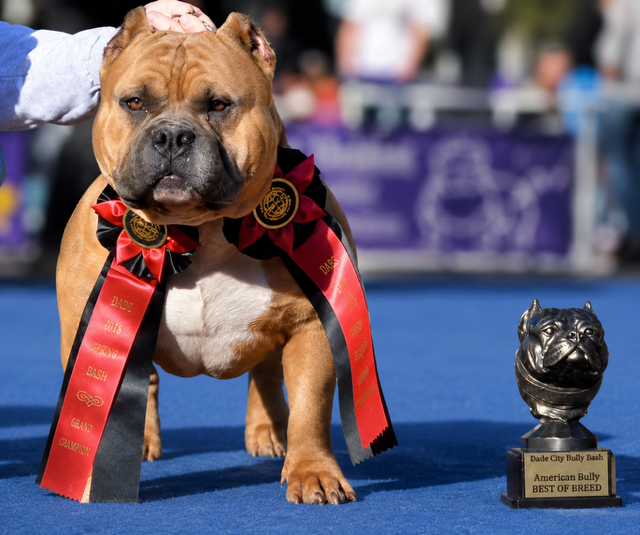
    (Image above ABKC National Grand Champion Winner Thee Buss (Pocket Bully))

    The two main registry that accept the American Bully breed are:

    ABKC (American Bully Kennel Club)

    UKC (United Kennel Club)

    Other new registry begins to appear as the breed becomes more popular includes but not limited

    BRC Global Canine Pedigrees

    ABR – American Bully Registry

    BBKC – Bully Breed Kennel Club

    BullyPedex

    WBR – World Bully Registry

    Buy pedigree registered American Bully, Exotic Bully, Pocket Bully, Micro Bully, Extreme Bully: Click Here

  • What’s an Extreme dog in the American Bully breed?

    According to Khanh Nuygen founder of BBKC (Bully Breed Kennel Club) and owner of Phoking Style National Grand champion Rockomaina.
    Quote below:
    “WE HAD A CRAZY DISCUSSION ON WHAT AN EXTREME DOG IS ……AGAIN SO TO BE CLEAR ON WHAT AN EXTREME IS. ITS OVER DONE FEATURES ON THE DOG THAT MAKES IT AN EXTREME DOG NOT HEIGHT….IM GOING TO NAME THEM IN ORDER IMO FROM THE MOST IMPORTANT TO THE LEAST IMPORTANT

    1: MOBILITY (can’t move u basically an overdone liability
    2: BIG HEAD 24 PLUS, BONE STRUCTURE
    3 :OVERLOAD SHOULDER WITH MASS AND MUSCLE ON TOP OF THOSE SHOUDLERS
    4: HUGE ARCH NECK
    5: WIDTH CAN BE WIDER THAN HEIGHT OR EQUAL TO HEIGHT NOT NARROW
    6:BARREL CHEST
    7:BIG THICK REAR WITH OVERDONE INNER THIGH MUSCLE
    8:MUSCLE DEFINITITON
    9:HEIGHT
    10: CONFIDENT TEMPERAMENT ( A SCARY ASS DOG TAKES AWAY FROM THE WOW FACTOR )”

    Image of PhoKing Colossal

    Bashar Daoud CEO and founder of Muscletone Bullies, famous for his Extreme Breed of American Bullies. Stated on his Facebook page in October 2023: “I see people dont understand what i explained yesterday.  So once more, the original standard said the dog should be as wide as he is tall . 98% of dogs are more narrow than tall, so its  already a fault according to the original standard of the breed, yet most judges over look it cause its been rewritten.  Now as an extreme should be wider than tall and also carry more mass and bone. So, instead of posting your dog and calling him extreme, please first measure your dog properly . Now, he should also be as long as he is tall ! If you have a

    perfect box or an extreme dog, then show me his movement and topline . If you can’t land all of the above in to one dog . Then, continue to educate yourself on structure and understanding of motion and symmetry in the animal. Cause an extreme is very different than the normal american bully !

    Image of Muscletone King Kong.

    Image of Bullymon Astro Boy, Astro Boy ancestry includes Phoking Rocko and Muscletone Magoo in his pedigree. Shorter in status yet still possess all the extreme quality features of his ancestor’s bloodline.

    Source credit: Facebook, PhokingStyleBullies, Muscletone, Bullymon

    Buy Extreme American Bully: Click Here

  • Buying American Bully and Tips on How to find a good American Bully Breeder

    Choosing an American Bully canine or pup can be a mind-boggling measure, things you have to consider when picking your ideal puppy and/or dog. Before you decide on adding an American Bully to be a part of your family consider the following.

    Decide on what American Bully Class and Size

    Medium to Small

    If you are after more on the Medium to Smaller size Bully, consider a Pocket Bully or Micro size Bully. Pocket Bully are no taller than 16 inch at the withers and Micro is no taller than 14 inch at the Withers. For size comparison Pocket Bully height is roughly the size of a English Staffordshire Terriers, English Bulldogs, and Boston Terriers height, yet American Pocket Bully has a distinctive body structure with more mass and heavy bone. The Micro size can be most resemblance to their relative (in height only) the French Bulldogs and Mini Bulldogs.

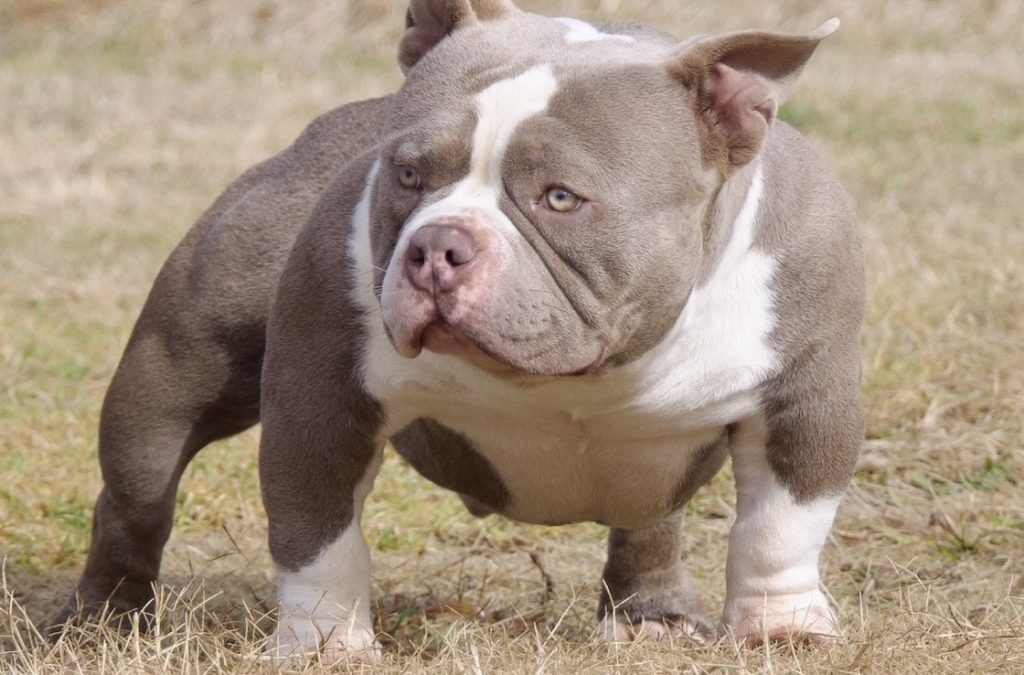
    The Exotic Bully can range in size from 10-16 inches. They have a unique facial features compared to their cousin the American Pocket Bully, with a shorter snout and cartoon like face. Due to their short muzzle and stocky body build, similarity to their Bulldogs relative, they tend to have the same health issue and are most suitable to the less active companion.

    Though bear in mind a weight and overall size of a Pocket Bully, Micro Bully and Exotic Bully can topple them into the Medium to Large size dog breed.

    Medium to Large

    For those who are after a larger Bully, the largest of the American Bully Breed Class are American XL Bully heights over 19 inches at the withers and weighing in approximately 50kg, extreme feature and taller than 23 inches are sometime known as XXL Bullys.

    The Standard class and Classic class American Bully are the same in height, between 17 inch to 19 inch at the withers, however the Standard Bully has more mass and bulk, whereas the Classic American Bully resemble more like their cousin with added mass, the American Staffordshire Terriers and the American Pit-Bull Terriers with the drive and aggression temperament breed out, the original combination that makes up the American Bully 40 so years ago.

    Where can you find American Bully and Exotic Bully?

    Majority of Bullies enthusiast are finding American Bullies and Exotic Bullies via Breeders Registry Club (such as ABKC, UKC, BullyPedex), American Bully and Bully Breed Dog Shows, online website, social media such as Facebook, Instagram, and Dog/Pet classification, referrals from Friends and Family. With so many means of sourcing for an American Bullies, how do you know which ones are a reputable and reliable Breeder and which are not or worse Scammer? View Our Avoid Scammer Tip here 

    Identify which American Bully Class they specialise in?

    Once you have decided which Size and Class of American Bullies and/or Exotic Bullies. You need to identify which breeders specialise in those class and most suitable for your needs. A great indication is viewing the puppies parents, along with verified family tree known as pedigree documentation/paper up to minimum four generation deep, this will give you an ideal of what the puppies will most likely inherit.

    • How long they have been breeding,
    • Any of their past breeding,
    • How did the puppies turned out in their past breeding.
    • What are their future planned breeding and pairing,
    • Their current dog they have. All these will give you an indication if the breeder offer what you are looking for.
    • What support do they offer to customer – Once you acquire your puppy from a chosen breeder, from time to time you may need to seek for guidance and assistant.
    •  

    How do you identify a reputable breeder/s?   

    Ok, so you decided that American Bullies or an Exotic Bullies breed is for you.

    Choosing where to buy your dog will depend on your expectations and reason for wanting an American Bully. Are you after American Bully as a companionship pet, for breeding or Show conformation? Is there a particular look you are after? Different breeders may breed certain Size/Class of American Bully or Exotic Bully, and some breeders may be known for a particular design/look of a Bully and desired temperament.

    Finding a responsible breeder you trust is your first step. It is important to do your due diligent before making a commitment to a breeder.

    How are the puppies and dogs living condition and how do they treat their dogs?

    Passionate breeders spend time socialising their animal so they are friendly and happy, a happy American Bully will be adaptable when visitor are around and love seeking attention from their owners and visitors. They genially care about their dog’s overall well-being and health and are updated with worming, vaccination and other medical needs. Quality breeders are proud of their American Bullies and are happy to show you their dogs and their dogs living area. If you are unable to meet the breeder in person at their Kennel or home. Ask to meet your breeder and their dogs via a video conferencing call/system. Observe the dogs and the breeder –

    • Do they provide a high standard of care and living conditions for all their animals?
    • Are the premises clean?
    • Odor-free?
    • Are the dogs well fed?
    • Are their dogs keep in spacious and clean environment?
    • Observe how the breeder treat their dogs.
    • Does the breeder show a genuine passion for their dogs?
    • How do the dogs interact with the breeder and with strangers?
    • How do the dogs interact with their pack and other dogs?

    Do they allow you to see the puppy/dog parents?

    Seeing the puppy/ dogs parents will give you a sense of your dog’s temperament, size, and appearance. Avoid breeder who does not allow you to see the parents or puppy, especially those who only show you one photo, or Photo that have been edited to make the dog appear bigger/larger, wider etc then they actually are. Where in-case viewing is not permitted, eg COVID or safety of their dogs or family or long distance, always request a live video conference call/system.

    How many type of dogs do they breed?

    High quality breeders are dedicated to one or two types of dogs and they invest their time, funds and resource in bettering the breed and their program. A breeder that focuses solely on American Bullies demonstrates their love and dedication to the breed and will most likely be knowable in that breed.

    Was the breeding planned?

    American Bully breeders who care about their breed and program, will spend time studying, planning, preparing any planned breeding with the right American Bully breeding pair and ensuring they find suitable home.

    Does the Breeder Ask you question?

    As a Buyer we ask many questions to the breeder in search for our ideal American Bully. A responsible breeder will also ask their potential buyers question to see if they are the ideal candidate for their puppies and dogs. They truly are concern with finding the right home for their puppies and dogs. A breeder will ask you question such as

    • Your current situation,
    • If you will be away from home a lot
    • If there are kids or elderly members in the house
    • How much exercise you can give them
    • Where they will sleep etc.
    • A good breeder will be honest and if they don’t think you are suited to the breed, they will suggest going with a different breed.

    Can the Breeder Provide references on request?

    They should be happy to offer you reference. This could be from existing buyers, letters from their vet or local breeder organisation.

    Do the puppies and parents have verified pedigree?

    If you’re investing in a high-quality American Bully, you want to make sure their pedigree is verified. Are the puppy and puppy parents registered with the associated registry for that breed? Ensure they provide you with the documentation and paperwork. You should never purchase a dog or puppy from a breeder who says their dog is purebred, but doesn’t have paperwork to prove it.

    What information should an American Bully breeder be able to provide?

    Once you have done your research and found a breeder. Some of the information they should be able to provide you includes:

    • They are knowledgeable and have a great understanding about the breed. They should be able to provide you with information regarding the breed and be able to comfortably answer question related to the American Bully. 
    • Be able to provide information about the dog’s family history (parents, grandparents and great-grandparents) and you should be able to meet at least the puppy’s mother if you visit.
    • They should be able to provide a certified pedigree, like the pedigrees offered by BullyPedex, ABKC, UKC. Any relevant documents, paperwork and contracts.
    • Be able to provide documentation from a veterinarian that the puppy has been health tested, recorded update vaccinations the puppy has received and deworming treatments. Breeders may offer other documentation related to health, Vet breeding certificate and such.
    • Offer support and share with you how they are feeding the dogs and puppies, any training or socialization prior to you taking your American Bully puppy home and any additional information, guides and tips to help you in assisting the transition of the puppies to their new home and environment.

    Souce: BullyPedex, RSPCA, DogNSW